The BHSEC campus was hit hard by the giant storm and subsequent flooding that was "Sandy". We were biting our nails waiting for news about the garden after the storm hit. To our relief, we received word days later that somehow the garden made it through the storm relatively unscathed.
Although our garden was in decent shape, the rest of the school didn't fair as well. The gym and the cafeteria were both under water, the entire first floor had to be pumped dry and cleaned ultra-throughly. Filthy storm water reached several feet up the school walls and left a scum that had to be scraped off and the outdoor wooden benches needed to be sanded and re-stained.
The mighty Kristi Powell organized a very successful clean up day last Saturday. Parents, students and loyal members of the BHSEC community showed up to clean, scrape, paint, weed, transplant, build and actively show their support for the school.
A huge heart felt THANK YOU goes out to all of those who helped!
Parent volunteers assembling our new garden cart
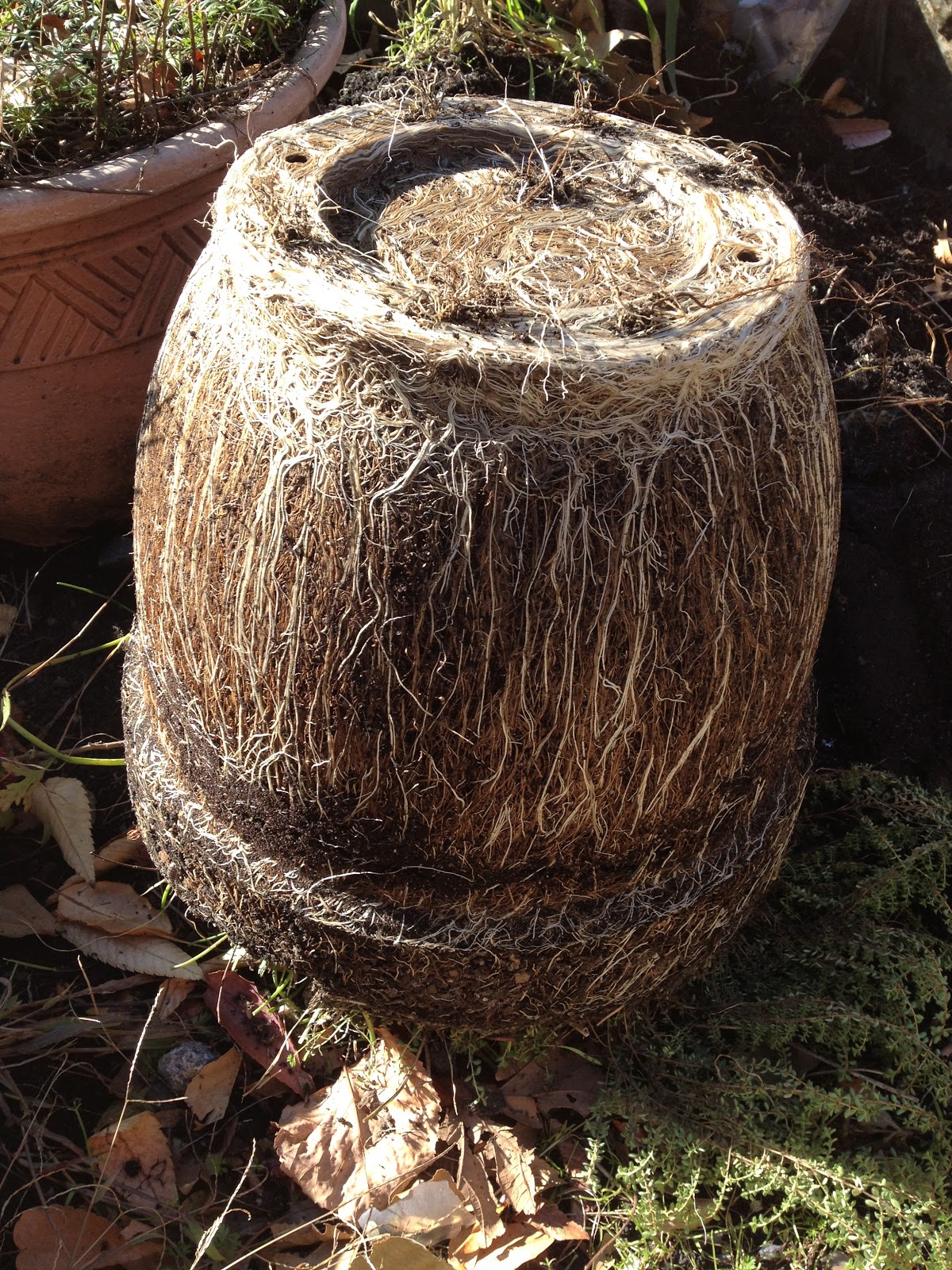
The most root-bound plant most of us had seen, we wished we had a chainsaw.
Zana, our garden club president
Kristi Powell, Principal Dr. Lerner and parent volunteers with the finished product
With the help of some handy parents we were able to construct our rat-proof bed cover prototype! We can't wait to put it to use!
Teacher, Tess Diamond wheels away the debris and compost from the day.
Several weeks ago the New York Times published an article entitled "No Appetite for Good-for-You School Lunches, "given my line of work, the title itself made me cringe. The article went on to chronicle the dissatisfaction some high school students are finding with the changes made to school lunches in accordance with the Healthy, Hunger-Free Kids Act . The act requires schools to increase the amount of fruits and vegetables in their offerings and rein in the amount of calories each portion contains to no more than 850 calories (previously, there was no restriction). Adding fuel to the fire, a price increase of 10 cents was implemented as part of a federal mandate to cover the cost of the lunches. Students are incensed at the increased prices, bad flavor and smaller potion sizes of the meals. Who can blame them?
To illustrate their frustration students from Wallace County High School in Sharon Springs Kansas produced this hilarious and poignant video:
The intentions of the policy are right on target however, the execution clearly does not resonate with hungry and opinionated teenagers. Striking the right balance between health, taste and engagement at a public school is tricky at best but fortunately, there are programs including our own "Food Politics and Systems" that are looking to do just that.
Programs like ours dissect all aspects of the food system in a tangible way so that students are empowered to make decisions about what they eat and buy. Our cooking and gardening classes strive to give students basic and practical skills that they can implement in their homes and communities. To this day, we have never had a student turn down a dish made with fresh ingredients they have grown and prepared themselves.
These classes are a great privilege for the students who can participate but the question remains: how do we reach students who are not in our class or schools that don't offer programs like ours? One standout example is NYC's "Garden to Cafe" program, supported by the DOE, the program facilitates the use of produce grown in the school garden to be served in the cafeteria. The connection might seem obvious but there is usually a ton of red tape to sift through before anything can be introduced to a school cafeteria. This program is the best way to get students to experience the pinnacle of local and fresh. Sure, it's easy for students to toss out a browning piece of overcooked broccoli but most can't resist biting into a sweet cherry tomato grown just feet from their lunch table- it might even have them coming back for seconds.
With hopes to expand our program and take the Mobile Kitchen Classroom on a national tour we are looking forward to helping more schools find ways to engage students in all aspects of food literacy.
Growing carrots, broccoli, tomatoes and more!
Enjoying the fruits of our labor during our "Mexican Feast". Homemade tortillas, fajitas, frijoles con arroz!
We're back in action at BHSEC and making the most of the waning sunlight. This semester our Food Politics and Systems classes are taking a new format; we are cycling through the 10th grade advisories with workshops in cooking, gardening and food politics. We are happy to have the opportunity to reach so many students and give them the tools to take responsibility for their food choices at home, at school and in their community.
Here is what is in store for the classes:
Class 1: Basic Gardening- This class will focus on growing skills for seed to harvest with work in the BHSEC garden and indoor seed starting during the winter months.
Class 2: Basic Cooking Skills- Taught in the BHSEC cafeteria kitchen the focus of this class will be building culinary skills with discussion focused on food access and nutrition.
Class 3: Food Politics- This class will focus on the politics that determine national and local food policy with a critical discussion and analysis of the Farm Bill.
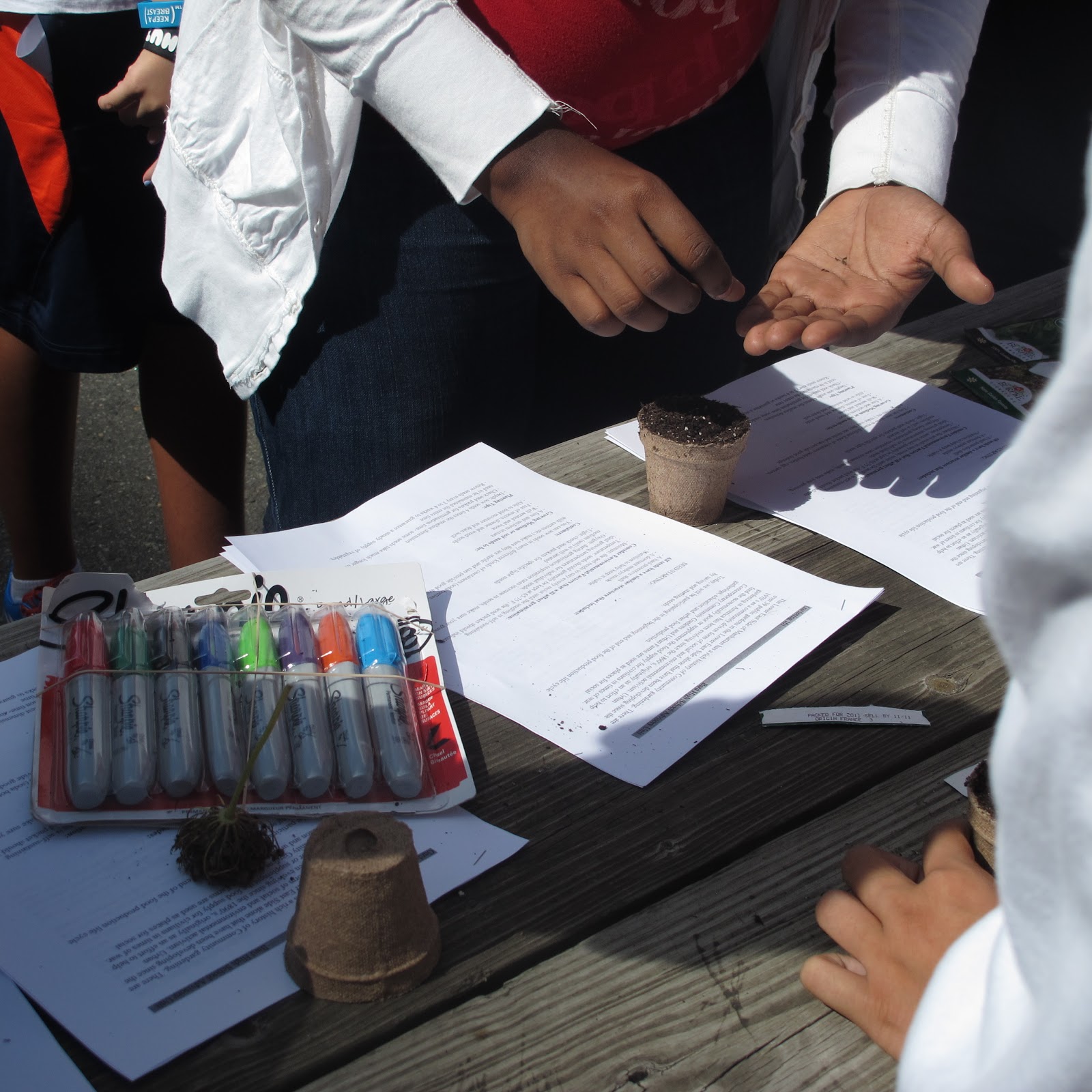
What to do with these seeds?
Ah! Plant them, water them, love them.
Collecting seeds to save
The second exciting development of the year is the formation of our Garden Club or as Tess likes to call it, "ladies garden hour" (yes, its all girls for now). We have so many exciting plans for the year including field trips, garden design classes and cooking lessons. We can't wait to cook with our just-picked edibles in the spring!
Sign up for garden club!
Wielding a rake in a skirt, watch out.
Taking care of our tree pits- each member is responsible for two.
I don’t think IFAP is sustainable, but I am having a hard time explaining why. In other words, if I had to convince all those involved in IFAP to stop what they’re doing, I don’t think I could do it. Except for an appeal to the morality and humanity and empathy of IFAPers, I know of no effective methods. From the movie we watched, I am most struck by a few things. First, the animal waste confinement farms produce and how poorly managed that waste is. Second, I am struck by the density and poor living-conditions of animals in factory farms [huge space + high density=woah]. Third, I am struck by the corporation-dictators who determine how smaller serf-like farmers work and thus live. Fourth, I am struck by the manipulative power of corporate “bucolic dairy farm” propaganda. Finally, I am struck by how attractive the pasture system and other alternative animal food production methods appear in the film. If IFAP is unsustainable, then I think an alternative for meat and dairy would look like a nation-wide local-as-possible pasture system, with a larger percentage of the population working as farmers.
As consumers: Buying and eating are voting; they are political acts. To avoid contributing to the faults of IFAP, if we eat meat and dairy in the first place, we can eat less of it. If we can afford to, we can buy meat and dairy sourced from independent farms. We should avoid contact and involvement with IFAP as much as possible as consumers, but as citizens we should involve with it by trying to improve it or replace it with more sustainable alternatives.
On our thursday class we learned about pollination. On our tuesday class we learned a) about the odorous and noxious problems of putting too much chicken poop into compost, and b) what it must have smelt/felt like to be a feudal dung-shovelling serf! As profoundly humbling as learning about pollinators was -- humbling because although humans can be pollinators, MOST pollinators are insects, non-human animals, winds, and rains, so that we can't give ourselves credit for everything that benefits us and we should be humbled and grateful -- I found the compost experience more valuable and edifying. I will NEVER put that much of an odorous substance into compost ever again. On a more serious note, well-done compost is very helpful for us as humans and environmentally helpful a smart use of waste. However, as we learned on Tuesday, well-done compost demands a careful BALANCE of components that simply was not there with that demon-stuff we shoveled. I actually have no idea if the overly-nitrogenous compost will work well as a fertilizer, but as Tess said "Compost is not supposed to smell like that!" I suspect that a good compost smells better than that fowl-feces-fiesta we worked with. I propose that we discuss what makes a good compost in class. Now I will stop the compost-bashing (I am also in no way blaming the awesome people at the park we go to--thank you for working with us guys!).
A note on the pollinators: I am always surprised every Spring by how few pollinators I see compared to how many flowers I see. What a beautiful, subtle, and healthily transformative process for flowers to bloom in Spring all with the 'help' (unwitting or unconscious) of pollinators! I can easily imagine how people could think of a god or divine force causing the Springtime bloom. Also, it is amazing the sort of co-evolution that has happened between pollinators and plants: I recommend looking up videos of this amazing subject! Thats all folks, :)
Industrial Food Animal Production (IFAP) is basically a method of farming that is supposed to help "improve" the production of farming. However, it is actually a very unethical method because this system involves raising thousands of the same time of animal, in a very packed environment. The animals are not treated too well and are also over fed and given growth hormones. In the film we watched, there was a woman who was very against this system. Instead of completely excluding meat or dairy in her diet, she decided to start her own farm. She claimed that people will never stop eating animals, so what needs to change is the production process of animals. IFAP is obviously not the method of farming we all want to have, but asking people to step away from such a technologically advanced and highly profitable system is very unrealistic. Hopefully, people will slowly start changing their ways and will revert to the safer and simpler way of farming. This will not only help our own environment and health, but possibly other countries as well because our behaviors will have an influence on theirs. What we can do as consumers is make sure we know exactly where our food is coming from. Making sure to buy food from small farms rather than buying food that came from a big factory.